THE DISAPPEARANCE OF LANDSCAPE: OAKLEYVILLE
August 29, 2026 – March 20, 2027
BOOK A GUIDED TOUR
REGISTER TO VISIT US DURING OPEN HOURS
For private viewings by appointment, please email visit@watermillcenter.org.
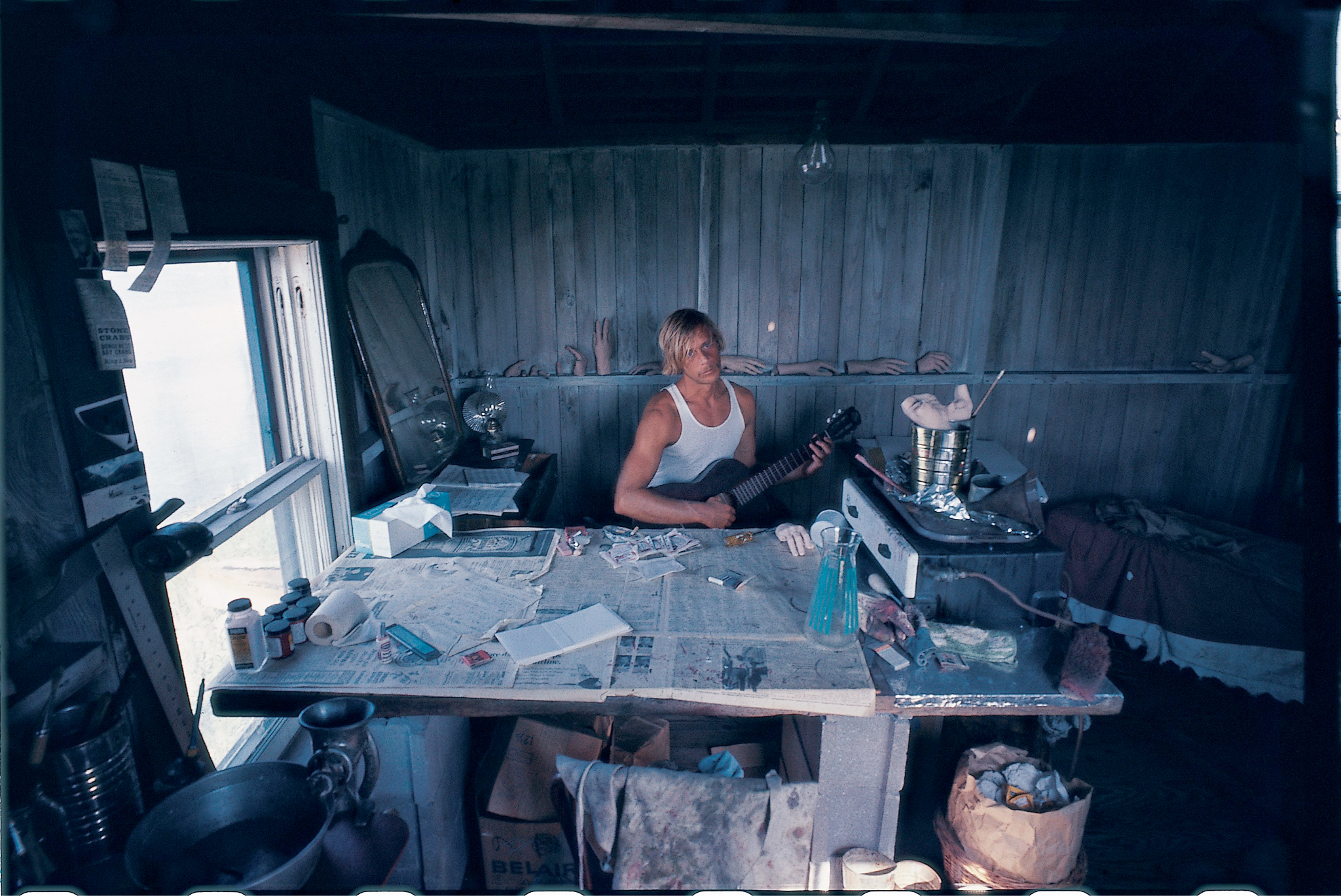
The Disappearance of Landscape: Oakleyville, curated by Marcelo Gabriel Yáñez and Noah Khoshbin, will investigate the practices of five artists who lived and worked between New York City and the sparsely populated Fire Island community of Oakleyville from the mid-1960s to present day: Sheyla Baykal (1944–1997), Peter Hujar (1934–1987), Matthew Leifheit (b. 1988), Paul Thek (1933–1988) and Ann Wilson (1931–2023). The exhibition features a selection of paintings, photographs, and sculptures made by the artists while living in Oakleyville.
Located about an hour outside of New York City, accessible primarily by boat, and traversable almost strictly by foot, Fire Island is best known as a site of sexual liberation and natural escape for New Yorkers over the course of the twentieth century. Unincorporated and unlisted on maps, Oakleyville is an inholding within Fire Island’s storied maritime holly forest, which became a nexus for an interconnected network of queer Downtown New York artists beginning in 1964.
The exhibition considers how Fire Island’s unique environmental conditions acted as a collaborator and dictating force in some of these artists’ work, in these instances framing a relationship to Fire Island as one of symbiosis and exploring how climate, ecological forces, and nonhuman life can collaborate and, at times, gain agency over the artist and choreograph their work.
With significant portions of Fire Island projected to be submerged within the next thirty to fifty years due to sea level rise—and the maritime holly forest expected to be among the first areas lost—Oakleyville will soon become inaccessible. In the context of the current climate crisis, the uniquely precarious nature of the isolated island environment, its vulnerability to natural forces and its sublime extremities, takes on a vital resonance.
Against this backdrop, The Disappearance of Landscape: Oakleyville reflects on Fire Island as both a site of artistic community and a fragile environment increasingly under threat, foregrounding the role of place not simply as a subject of representation, but as an active force in the creation of art.
The exhibition also holds a particular connection to Paul Thek’s legacy at The Watermill Center. In 1988, Thek left his estate to his friend and longtime collaborator Robert Wilson, founder and artistic director of The Watermill Center. Since that time, the Center, in partnership with the Estate of Paul Thek, has worked to steward and advance Thek’s legacy through the preservation and care of his archive and collection. Today, The Watermill Center holds the most comprehensive collection of Thek’s works and papers, and keeps a selection of materials on permanent display.
The Disappearance of Landscape: Oakleyville will follow solo presentations of work by Paul Thek in New York at Pace Gallery, running May 15 through August 14 at 540 West 25th Street, and Galerie Buchholz, running May 13 through July 25. This exhibition and its title is derived from Yáñez’s book manuscript in progress about artists on Fire Island between the 19th and 21st centuries.
Support for The Disappearance of Landscape: Oakleyville is provided by the Robert D.L. Gardiner Foundation. Additional support is provided by the Blue Rider Group and the Rick and Debbie Kleeman Charitable Fund.
Image: Peter Hujar, Paul Thek, Oakleyville, Fire Island, 1966