
THE DISAPPEARANCE OF OAKLEYVILLE, 1966–2022
August 29, 2026 – March 20, 2027
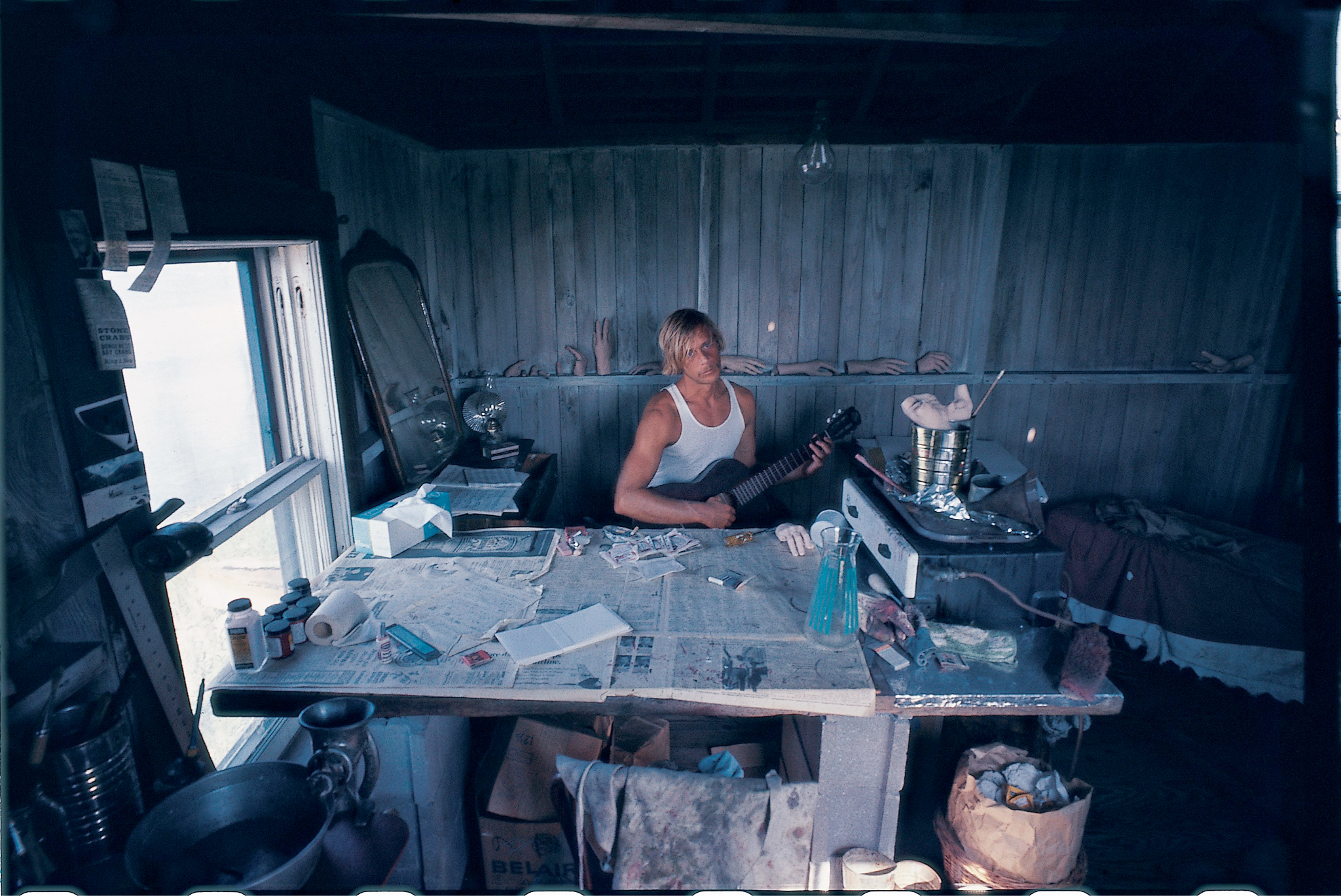
The Disappearance of Landscape: Oakleyville, 1964–2022, organized by Marcelo Gabriel Yanez and Noah Khoshbin, will investigate the practices of four artists who lived and worked between New York City and the sparsely populated Fire Island community of Oakleyville from the mid-1960s to present day: Sheyla Baykal (1944–1997), Peter Hujar (1934–1987), Matthew Leifheit (b. 1988), and Paul Thek (1933–1988). The exhibition features a selection of paintings, photographs, and sculptures made by the artists while in Oakleyville.
Located about an hour outside of New York City, accessible primarily by boat, and traversable strictly by foot, Fire Island is best known as a site of sexual liberation and natural escape for New Yorkers over the course of the twentieth century. Unincorporated and unlisted on maps, Oakleyville is an inholding within Fire Island’s storied maritime holly forest, which became a nexus for an interconnected network of queer Downtown New York artists beginning in 1964.
The exhibition recognizes the environment as a collaborator and dictating force in artists’ work, rather than a subject to be represented or a site upon which artists impose ideology. It presents Baykal, Hujar, Leifheit, and Thek’s relationships to Fire Island as one of symbiosis, exploring how climate, ecological force, and nonhuman life can gain agency over the artist and choreograph, even collaborate on, their work. The shifting, temporal nature of the island landscape highlights the critical role Fire Island’s ecosystem played in the evolution of these artists’ practices.
In the context of the current climate crisis, the uniquely precarious nature of the isolated island environment, its vulnerability to natural forces and the push-pull of joy and fear, takes on a vital resonance. Much of Fire Island is projected to be underwater within the next thirty to fifty years due to climate change, with the maritime holly forest among the first ecosystems expected to disappear. As rising sea levels reshape the coastline, Oakleyville itself will likely become inaccessible to humans.
Against this backdrop, The Disappearance of Landscape: Oakleyville, 1964–2022 reflects on Fire Island as both a site of artistic community and a fragile environment increasingly under threat, foregrounding the role of landscape not simply as a subject of representation, but as an active force in the creation of art.
The exhibition also holds a particular connection to Paul Thek’s legacy at The Watermill Center. In 1988, Thek left his estate to his friend and longtime collaborator Robert Wilson, founder and artistic director of The Watermill Center. Since that time, the Center, in partnership with the Estate of Paul Thek, has worked to steward and advance Thek’s legacy through the preservation and care of his archive and collection. Today, The Watermill Center holds the most comprehensive collection of Thek’s works and papers, and keeps a selection of materials on permanent display.
This exhibition will follow solo presentations of work by Paul Thek in New York at Pace Gallery, running May 15 through August 14 at 540 West 25th Street, and Galerie Buchholz, running May 13 through July 25.
Image: Peter Hujar, Paul Thek, Oakleyville, Fire Island, 1966